October 17, 2016 – The New York Times
At eighty-two, the troubadour has another album coming. Like him, it is obsessed with mortality, God-infused, and funny.
By David Remnick
When Leonard Cohen was twenty-five, he was living in London, sitting in cold rooms writing sad poems. He got by on a three-thousand-dollar grant from the Canada Council for the Arts. This was 1960, long before he played the festival at the Isle of Wight in front of six hundred thousand people. In those days, he was a Jamesian Jew, the provincial abroad, a refugee from the Montreal literary scene. Cohen, whose family was both prominent and cultivated, had an ironical view of himself. He was a bohemian with a cushion whose first purchases in London were an Olivetti typewriter and a blue raincoat at Burberry. Even before he had much of an audience, he had a distinct idea of the audience he wanted. In a letter to his publisher, he said that he was out to reach “inner-directed adolescents, lovers in all degrees of anguish, disappointed Platonists, pornography-peepers, hair-handed monks and Popists.”
Cohen was growing weary of London’s rising damp and its gray skies. An English dentist had just yanked one of his wisdom teeth. After weeks of cold and rain, he wandered into a bank and asked the teller about his deep suntan. The teller said that he had just returned from a trip to Greece. Cohen bought an airline ticket.
Not long afterward, he alighted in Athens, visited the Acropolis, made his way to the port of Piraeus, boarded a ferry, and disembarked at the island of Hydra. With the chill barely out of his bones, Cohen took in the horseshoe-shaped harbor and the people drinking cold glasses of retsina and eating grilled fish in the cafés by the water; he looked up at the pines and the cypress trees and the whitewashed houses that crept up the hillsides. There was something mythical and primitive about Hydra. Cars were forbidden. Mules humped water up the long stairways to the houses. There was only intermittent electricity. Cohen rented a place for fourteen dollars a month. Eventually, he bought a whitewashed house of his own, for fifteen hundred dollars, thanks to an inheritance from his grandmother.
Hydra promised the life Cohen had craved: spare rooms, the empty page, eros after dark. He collected a few paraffin lamps and some used furniture: a Russian wrought-iron bed, a writing table, chairs like “the chairs that van Gogh painted.” During the day, he worked on a sexy, phantasmagoric novel called “The Favorite Game” and the poems in a collection titled “Flowers for Hitler.” He alternated between extreme discipline and the varieties of abandon. There were days of fasting to concentrate the mind. There were drugs to expand it: pot, speed, acid. “I took trip after trip, sitting on my terrace in Greece, waiting to see God,” he said years later. “Generally, I ended up with a bad hangover.”
Here and there, Cohen caught glimpses of a beautiful Norwegian woman. Her name was Marianne Ihlen, and she had grown up in the countryside near Oslo. Her grandmother used to tell her, “You are going to meet a man who speaks with a tongue of gold.” She thought she already had: Axel Jensen, a novelist from home, who wrote in the tradition of Jack Kerouac and William Burroughs. She had married Jensen, and they had a son, little Axel. Jensen was not a constant husband, however, and, by the time their child was four months old, Jensen was, as Marianne put it, “over the hills again” with another woman.
One spring day, Ihlen was with her infant son in a grocery store and café. “I was standing in the shop with my basket waiting to pick up bottled water and milk,” she recalled decades later, on a Norwegian radio program. “He is standing in the doorway with the sun behind him.” Cohen asked her to join him and his friends outside. He was wearing khaki pants, sneakers, a shirt with rolled sleeves, and a cap. The way Marianne remembered it, he seemed to radiate “enormous compassion for me and my child.” She was taken with him. “I felt it throughout my body,” she said. “A lightness had come over me.”
Cohen had known some success with women. He would know a great deal more. For a troubadour of sadness—“the godfather of gloom,” he was later called—Cohen found frequent respite in the arms of others. As a young man, he had a kind of Michael Corleone Before the Fall look, sloe-eyed, dark, a little hunched, but high courtesy and verbal fluency were his charm. When he was thirteen, he read a book on hypnotism. He tried out his new discipline on the family housekeeper, and she took off her clothes. Not everyone over the years was quite as bewitched. Nico spurned him, and Joni Mitchell, who had once been his lover, remained a friend but dismissed him as a “boudoir poet.” But these were the exceptions.
Leonard began spending more and more time with Marianne. They went to the beach, made love, kept house. Once, when they were apart—Marianne and Axel in Norway, Cohen in Montreal scraping up some money—he sent her a telegram: “Have house all I need is my woman and her son. Love, Leonard.”
There were times of separation, times of argument and jealousy. When Marianne drank, she could go into a dark rage. And there were infidelities on both sides. (“Good gracious. All the girls were panting for him,” Marianne recalled. “I would dare go as far as to say that I was on the verge of killing myself due to it.”)
In the mid-sixties, as Cohen started to record his songs and win worldly success, Marianne became known to his fans as that antique figure—the muse. A memorable photograph of her, dressed only in a towel, and sitting at the desk in the house on Hydra, appeared on the back of Cohen’s second album, “Songs from a Room.” But, after they’d been together for eight years, the relationship came apart, little by little—“like falling ashes,” as Cohen put it.
Cohen was spending more time away from Hydra pursuing his career. Marianne and Axel stayed on awhile on Hydra, then left for Norway. Eventually, Marianne married again. But life had its burdens, particularly for Axel, who has had persistent health problems. What Cohen’s fans knew of Marianne was her beauty and what it had inspired: “Bird on the Wire,” “Hey, That’s No Way to Say Goodbye,” and, most of all, “So Long, Marianne.” She and Cohen stayed in touch. When he toured in Scandinavia, she visited him backstage. They exchanged letters and e-mails. When they spoke to journalists and to friends of their love affair, it was always in the fondest terms.
In late July this year, Cohen received an e-mail from Jan Christian Mollestad, a close friend of Marianne’s, saying that she was suffering from cancer. In their last communication, Marianne had told Cohen that she had sold her beach house to help insure that Axel would be taken care of, but she never mentioned that she was sick. Now, it appeared, she had only a few days left. Cohen wrote back immediately:
Well Marianne, it’s come to this time when we are really so old and our bodies are falling apart and I think I will follow you very soon. Know that I am so close behind you that if you stretch out your hand, I think you can reach mine. And you know that I’ve always loved you for your beauty and your wisdom, but I don’t need to say anything more about that because you know all about that. But now, I just want to wish you a very good journey. Goodbye old friend. Endless love, see you down the road.
Two days later, Cohen got an e-mail from Norway:
Dear Leonard
Marianne slept slowly out of this life yesterday evening. Totally at ease, surrounded by close friends.
Your letter came when she still could talk and laugh in full consciousness. When we read it aloud, she smiled as only Marianne can. She lifted her hand, when you said you were right behind, close enough to reach her.
It gave her deep peace of mind that you knew her condition. And your blessing for the journey gave her extra strength. . . . In her last hour I held her hand and hummed “Bird on the Wire,” while she was breathing so lightly. And when we left the room, after her soul had flown out of the window for new adventures, we kissed her head and whispered your everlasting words.
So long, Marianne . . .
Leonard Cohen lives on the second floor of a modest house in Mid-Wilshire, a diverse, unglamorous precinct of Los Angeles. He is eighty-two. Between 2008 and 2013, he was on tour more or less continuously. It is highly unlikely that his health will permit such rigors ever again. Cohen has an album coming out in October—obsessed with mortality, God-infused, yet funny, called “You Want It Darker”—but friends and musical associates say they’d be surprised to see him onstage again except in a limited way: a single performance, perhaps, or a short residency at one venue. When I e-mailed ahead to ask Cohen out for dinner, he said that he was more or less “confined to barracks.”
Not long ago, one of Cohen’s most frequent visitors, and an old friend of mine—Robert Faggen, a professor of literature—brought me by the house. Faggen met Cohen twenty years ago in a grocery store, at the foot of Mt. Baldy, the highest of the San Gabriel Mountains, an hour and a half east of Los Angeles. They were both living near the top of the mountain: Bob in a cabin where he wrote about Frost and Melville and drove down the road to teach his classes at Claremont McKenna College; Cohen in a small Zen Buddhist monastery, where he was an ordained monk. As Faggen was shopping for cold cuts, he heard a familiar basso voice across the store; he looked down the aisle and saw a small, trim man, his head shaved, talking intently with a clerk about varieties of potato salad. Faggen’s musical expertise runs more to Mahler’s lieder than to popular song. But he is an admirer of Cohen’s work and introduced himself. They have been close friends ever since.
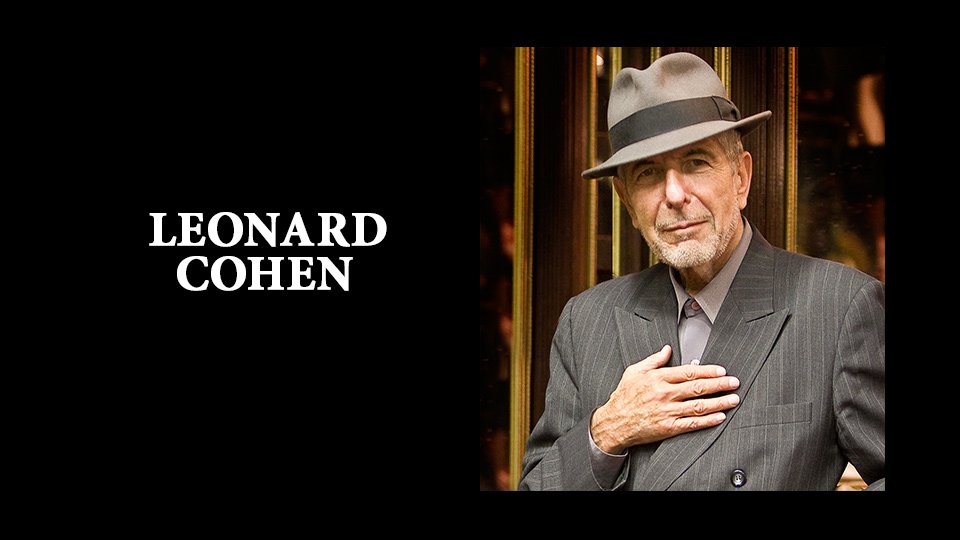
Cohen greeted us. He sat in a large blue medical chair, the better to ease the pain from compression fractures in his back. He is now very thin, but he is still handsome, with a full head of gray-white hair and razory dark eyes. He wore a well-tailored midnight-blue suit—even in the sixties he wore suits—and a stickpin through his collar. He extended a hand like a courtly retired capo.
“Hello, friends,” he said. “Please, please, sit right there.” The depth of his voice makes Tom Waits sound like Eddie Kendricks.
And then, like my mother, he offered what could only have been the complete catalogue of his larder: water, juice, wine, a piece of chicken, a slice of cake, “maybe something else.” In the hours we spent together, he offered many refreshments, and, always, kindly. “Would you like some slices of cheese and olives?” is not an offer you are likely to get from Axl Rose. “Some vodka? A glass of milk? Schnapps?” And, as with my mother, it is best, sometimes, to say yes. One day, we had cheeseburgers-with-everything ordered from a Fatburger down the street and, on another, thick slices of gefilte fish with horseradish.
Marianne’s death was only a few weeks in the past, and Cohen was still amazed at the way his letter—an e-mail to a dying friend—had gone viral, at least in the Cohen-ardent universe. He hadn’t set out to be public about his feelings, but when one of Marianne’s closest friends, in Oslo, asked to release the note, he didn’t object. “And since there’s a song attached to it, and there’s a story . . .” he said. “It’s just a sweet story. So in that sense I’m not displeased.”
Like anyone of his age, Cohen counts the losses as a matter of routine. He seemed not so much devastated by Marianne’s death as overtaken by the memory of their time together. “There would be a gardenia on my desk perfuming the whole room,” he said. “There would be a little sandwich at noon. Sweetness, sweetness everywhere.”
Cohen’s songs are death-haunted, but then they have been since his earliest verses. A half century ago, a record executive said, “Turn around, kid. Aren’t you a little old for this?” But, despite his diminished health, Cohen remains as clear-minded and hardworking as ever, soldierly in his habits. He gets up well before dawn and writes. In the small, spare living room where we sat, there were a couple of acoustic guitars leaning against the wall, a keyboard synthesizer, two laptops, a sophisticated microphone for voice recording. Working with an old collaborator, Pat Leonard, and his son, Adam, who has the producer’s credit, Cohen did much of his work for “You Want It Darker” in the living room, e-mailing recorded files to his partners for additional refinements. Age and the end of age provide a useful, if not entirely desired, air of quiet.
“In a certain sense, this particular predicament is filled with many fewer distractions than other times in my life and actually enables me to work with a little more concentration and continuity than when I had duties of making a living, being a husband, being a father,” he said. “Those distractions are radically diminished at this point. The only thing that mitigates against full production is just the condition of my body.
“For some odd reason,” he went on, “I have all my marbles, so far. I have many resources, some cultivated on a personal level, but circumstantial, too: my daughter and her children live downstairs, and my son lives two blocks down the street. So I am extremely blessed. I have an assistant who is devoted and skillful. I have a friend like Bob and another friend or two who make my life very rich. So in a certain sense I’ve never had it better. . . . At a certain point, if you still have your marbles and are not faced with serious financial challenges, you have a chance to put your house in order. It’s a cliché, but it’s underestimated as an analgesic on all levels. Putting your house in order, if you can do it, is one of the most comforting activities, and the benefits of it are incalculable.”
Cohen came of age after the war. His Montreal, however, was nothing like Philip Roth’s Newark or Alfred Kazin’s Brownsville. He was brought up in Westmount, a predominantly Anglophone neighborhood, where the city’s well-to-do Jews lived. The men in his family, particularly on his father’s side, were the “dons” of Jewish Montreal. His grandfather, Cohen told me, “was probably the most significant Jew in Canada,” the founder of a range of Jewish institutions; in the wake of anti-Semitic pogroms in the Russian imperium, he saw to it that countless refugees made it to Canada. Nathan Cohen, Leonard’s father, ran Freedman Company, the family clothing business. His mother, Masha, came from a family of more recent immigrants. She was loving, depressive, “Chekhovian” in her emotional range, according to Leonard: “She laughed and wept deeply.” Masha’s father, Solomon Klonitzki-Kline, was a distinguished Talmudic scholar from Lithuania who completed a “Lexicon of Hebrew Homonyms.” Leonard went to fine schools, including McGill and, for a while, Columbia. He never resented the family’s comforts.
“I have a deep tribal sense,” he said. “I grew up in a synagogue that my ancestors built. I sat in the third row. My family was decent. They were good people, they were handshake people. So I never had a sense of rebellion.”
When Leonard was nine, his father died; this moment, a primal wound, was when he first used language as a kind of sacrament. “I have some memories of him,” Cohen said, and recounted the story of his father’s funeral, which was held at their house. “We came down the stairs, and the coffin was in the living room.” Contrary to Jewish custom, the funeral workers had left the coffin open. It was winter, and Cohen thought of the gravediggers: it would be difficult to break the frozen ground. He watched his father lowered into the earth. “Then I came back to the house and I went to his closet and I found a premade bow tie. I don’t know why I did this, I can’t even own it now, but I cut one of the wings of the bow tie off and I wrote something on a piece of paper—I think it was some kind of farewell to my father—and I buried it in a little hole in the back yard. And I put that curious note in there. . . . It was just some attraction to a ritual response to an impossible event.”
Cohen’s uncles made sure that Masha and her two children, Leonard and his sister, Esther, did not suffer any financial decline after her husband’s death. Leonard studied; he worked in an uncle’s foundry, W. R. Cuthbert & Company, pouring metal for sinks and piping, and at the clothing factory, where he picked up a useful skill for his career as a touring musician: he learned to fold suits so they didn’t wrinkle. But, as he wrote in a journal, he always imagined himself as a writer, “raincoated, battered hat pulled low above intense eyes, a history of injustice in his heart, a face too noble for revenge, walking the night along some wet boulevard, followed by the sympathy of countless audiences . . . loved by two or three beautiful women who could never have him.”
And yet a rock-and-roll life was far from his mind. He set out to be an author. As Sylvie Simmons makes plain in her excellent biography “I’m Your Man,” Cohen’s apprenticeship was in letters. As a teen-ager, his idols were Yeats and Lorca (he named his daughter after Lorca). At McGill, he read Tolstoy, Proust, Eliot, Joyce, and Pound, and he fell in with a circle of poets, particularly Irving Layton. Cohen, who published his first poem, “Satan in Westmount,” when he was nineteen, once said of Layton, “I taught him how to dress, he taught me how to live forever.” Cohen has never stopped writing verse; the poem “Steer Your Way” was published in this magazine in June.
Cohen was also taken with music. As a kid, he had learned the songs in the old lefty folk compendium “The People’s Song Book,” listened to Hank Williams and other country singers on the radio, and, at sixteen, dressed in his father’s old suède jacket, he played in a country-music combo called the Buckskin Boys.
He took some informal guitar lessons in his twenties from a Spaniard he met next to a local tennis court. After a few weeks, he picked up a flamenco chord progression. When the man failed to appear for their fourth lesson, Cohen called his landlady and learned that the man had killed himself. In a speech many years later, in Asturias, Cohen said, “I knew nothing about the man, why he came to Montreal . . . why he appeared at that tennis court, why he took his life. . . . It was those six chords, it was that guitar pattern, that has been the basis of all my songs, and all my music.”
Cohen loved the masters of the blues—Robert Johnson, Sonny Boy Williamson, Bessie Smith—and the French storyteller-singers like Édith Piaf and Jacques Brel. He put coins in the jukebox to listen to “The Great Pretender,” “Tennessee Waltz,” and anything by Ray Charles. And yet when the Beatles came along he was indifferent. “I’m interested in things that contribute to my survival,” he said. “I had girlfriends who really irritated me by their devotion to the Beatles. I didn’t begrudge them their interest, and there were songs like ‘Hey Jude’ that I could appreciate. But they didn’t seem to be essential to the kind of nourishment that I craved.”
The same set of ears that first tuned in to Bob Dylan, in 1961, discovered Leonard Cohen, in 1966. This was John Hammond, a patrician related to the Vanderbilts, and by far the most perceptive scout and producer in the business. He was instrumental in the first recordings of Count Basie, Big Joe Turner, Benny Goodman, Aretha Franklin, and Billie Holiday. Tipped off by friends who were following the folk scene downtown, Hammond called Cohen and asked if he would play for him.
Cohen was thirty-two, a published poet and novelist, but, though a year older than Elvis Presley, a musical novice. He had turned to songwriting largely because he wasn’t making a living as a writer. He was staying on the fourth floor of the Chelsea Hotel, on West Twenty-third Street, and filled notebooks during the day. At night, he sang his songs in clubs and met people on the scene: Patti Smith, Lou Reed (who admired Cohen’s novel “Beautiful Losers”), Jimi Hendrix (who jammed with him on, of all things, “Suzanne”), and, if just for a night, Janis Joplin (“giving me head on the unmade bed / while the limousines wait in the street”).
After taking Cohen to lunch one day, Hammond suggested that they go to Cohen’s room, and, sitting on his bed, Cohen played “Suzanne,” “Hey, That’s No Way to Say Goodbye,” “The Stranger Song,” and a few others.
When Cohen finished, Hammond grinned and said, “You’ve got it.”
A few months after his audition, Cohen put on a suit and went to the Columbia recording studios in midtown to begin work on his first album. Hammond was encouraging after every take. And after one he said, “Watch out, Dylan!”
Cohen’s links to Dylan were obvious—Jewish, literary, a penchant for Biblical imagery, Hammond’s tutelage—but the work was divergent. Dylan, even on his earliest records, was moving toward more surrealist, free-associative language and the furious abandon of rock and roll. Cohen’s lyrics were no less imaginative or charged, no less ironic or self-investigating, but he was clearer, more economical and formal, more liturgical.
Over the decades, Dylan and Cohen saw each other from time to time. In the early eighties, Cohen went to see Dylan perform in Paris, and the next morning in a café they talked about their latest work. Dylan was especially interested in “Hallelujah.” Even before three hundred other performers made “Hallelujah” famous with their cover versions, long before the song was included on the soundtrack for “Shrek” and as a staple on “American Idol,” Dylan recognized the beauty of its marriage of the sacred and the profane. He asked Cohen how long it took him to write.
“Two years,” Cohen lied.
Actually, “Hallelujah” had taken him five years. He drafted dozens of verses and then it was years more before he settled on a final version. In several writing sessions, he found himself in his underwear, banging his head against a hotel-room floor.
Cohen told Dylan, “I really like ‘I and I,’ ” a song that appeared on Dylan’s album “Infidels.” “How long did it take you to write that?”
“About fifteen minutes,” Dylan said.
When I asked Cohen about that exchange, he said, “That’s just the way the cards are dealt.” As for Dylan’s comment that Cohen’s songs at the time were “like prayers,” Cohen seemed dismissive of any attempt to plumb the mysteries of creation.
“I have no idea what I am doing,” he said. “It’s hard to describe. As I approach the end of my life, I have even less and less interest in examining what have got to be very superficial evaluations or opinions about the significance of one’s life or one’s work. I was never given to it when I was healthy, and I am less given to it now.”
Although Cohen was steeped more in the country tradition, he was swept up when he heard Dylan’s “Bringing It All Back Home” and “Highway 61 Revisited.” One afternoon, years later, when the two had become friendly, Dylan called him in Los Angeles and said he wanted to show him a piece of property he’d bought. Dylan did the driving.
“One of his songs came on the radio,” Cohen recalled. “I think it was ‘Just Like a Woman’ or something like that. It came to the bridge of the song, and he said, ‘A lot of eighteen-wheelers crossed that bridge.’ Meaning it was a powerful bridge.”
Dylan went on driving. After a while, he told Cohen that a famous songwriter of the day had told him, “O.K., Bob, you’re Number 1, but I’m Number 2.”
Cohen smiled. “Then Dylan says to me, ‘As far as I’m concerned, Leonard, you’re Number 1. I’m Number Zero.’ Meaning, as I understood it at the time—and I was not ready to dispute it—that his work was beyond measure and my work was pretty good.”
Dylan, who is seventy-five, doesn’t often play the role of music critic, but he proved eager to discuss Leonard Cohen. I put a series of questions to him about Number 1, and he answered in a detailed, critical way—nothing cryptic or elusive.
“When people talk about Leonard, they fail to mention his melodies, which to me, along with his lyrics, are his greatest genius,” Dylan said. “Even the counterpoint lines—they give a celestial character and melodic lift to every one of his songs. As far as I know, no one else comes close to this in modern music. Even the simplest song, like ‘The Law,’ which is structured on two fundamental chords, has counterpoint lines that are essential, and anybody who even thinks about doing this song and loves the lyrics would have to build around the counterpoint lines.
“His gift or genius is in his connection to the music of the spheres,” Dylan went on. “In the song ‘Sisters of Mercy,’ for instance, the verses are four elemental lines which change and move at predictable intervals . . . but the tune is anything but predictable. The song just comes in and states a fact. And after that anything can happen and it does, and Leonard allows it to happen. His tone is far from condescending or mocking. He is a tough-minded lover who doesn’t recognize the brush-off. Leonard’s always above it all. ‘Sisters of Mercy’ is verse after verse of four distinctive lines, in perfect meter, with no chorus, quivering with drama. The first line begins in a minor key. The second line goes from minor to major and steps up, and changes melody and variation. The third line steps up even higher than that to a different degree, and then the fourth line comes back to the beginning. This is a deceptively unusual musical theme, with or without lyrics. But it’s so subtle a listener doesn’t realize he’s been taken on a musical journey and dropped off somewhere, with or without lyrics.”
In the late eighties, Dylan performed “Hallelujah” on the road as a roughshod blues with a sly, ascending chorus. His version sounds less like the prettified Jeff Buckley version than like a work by John Lee Hooker. “That song ‘Hallelujah’ has resonance for me,” Dylan said. “There again, it’s a beautifully constructed melody that steps up, evolves, and slips back, all in quick time. But this song has a connective chorus, which when it comes in has a power all of its own. The ‘secret chord’ and the point-blank I-know-you-better-than-you-know-yourself aspect of the song has plenty of resonance for me.”
I asked Dylan whether he preferred Cohen’s later work, so colored with intimations of the end. “I like all of Leonard’s songs, early or late,” he said. “ ‘Going Home,’ ‘Show Me the Place,’ ‘The Darkness.’ These are all great songs, deep and truthful as ever and multidimensional, surprisingly melodic, and they make you think and feel. I like some of his later songs even better than his early ones. Yet there’s a simplicity to his early ones that I like, too.”
Dylan defended Cohen against the familiar critical reproach that his is music to slit your wrists by. He compared him to the Russian Jewish immigrant who wrote “Easter Parade.” “I see no disenchantment in Leonard’s lyrics at all,” Dylan said. “There’s always a direct sentiment, as if he’s holding a conversation and telling you something, him doing all the talking, but the listener keeps listening. He’s very much a descendant of Irving Berlin, maybe the only songwriter in modern history that Leonard can be directly related to. Berlin’s songs did the same thing. Berlin was also connected to some kind of celestial sphere. And, like Leonard, he probably had no classical-music training, either. Both of them just hear melodies that most of us can only strive for. Berlin’s lyrics also fell into place and consisted of half lines, full lines at surprising intervals, using simple elongated words. Both Leonard and Berlin are incredibly crafty. Leonard particularly uses chord progressions that seem classical in shape. He is a much more savvy musician than you’d think.”
Cohen has always found performing unnerving. His first major attempt came in 1967, when Judy Collins asked him to play at Town Hall, in New York, at an anti-Vietnam War benefit. The idea was that he would make his stage début by singing “Suzanne,” an early song of his that Collins had turned into a hit after he sang it to her on the telephone.
“I can’t do it, Judy,” he told her. “I would die from embarrassment.”
As Collins writes in her memoir, she finally cajoled him into it, but that night, from the wings, she could see that Cohen, “his legs shaking inside his trousers,” was in trouble. He got halfway through the first verse and then stopped and mumbled an apology. “I can’t go on,” he said and walked off into the wings.
Out of sight, Cohen rested his head on Collins’s shoulder as she tried to get him to respond to the encouraging shouts from the crowd. “I can’t do it,” he said. “I can’t go back.”
“But you will,” she said, and, finally, he acceded. He went out, with the crowd cheering, and finished singing “Suzanne.”
Since then, Cohen has played thousands of concerts all over the world, but it did not become second nature until he was in his seventies. He was never one of those musicians who talk about feeling most alive and at home onstage. Although he has had many successful performance strategies—wry self-abnegation, drugs, drink—the act of giving concerts often made him feel like “some parrot chained to his stand.” He is also a perfectionist; a classic like “Famous Blue Raincoat” still feels “unfinished” to him.
“It stems from the fact that you are not as good as you want to be—that’s really what nervousness is,” Cohen told me. “That first time I went out with Judy Collins, it wasn’t to be the last time I felt this.”
In 1972, Cohen, now accompanied by a full complement of musicians and singers, arrived in Jerusalem at the end of a long tour. Just to be in that city was, for Cohen, a charged situation. (The following year, during the war with Egypt, Cohen showed up in Israel, hoping to replace someone who had been drafted. “I am committed to the survival of the Jewish people,” he told an interviewer at the time. He ended up performing, often many times a day, for the troops on the front.) Out onstage, Cohen started singing “Bird on the Wire.” He stopped after the audience greeted the opening chords and phrase with applause.
“I really enjoy your recognizing these songs,” he said. “But I’m scared enough as it is out here, and I think something is wrong every time you begin to applaud. So if you do recognize this song, would you just wave your hands?”
He fumbled again, and what at first had seemed like performative charm now appeared to signal genuine anxiety. “I hope you bear with me,” he said. “These songs become meditations for me and sometimes, you know, I just don’t get high on it and I feel that I’m cheating you. I’ll try it again. If it doesn’t work, I’ll stop in the middle. There’s no reason why we should mutilate a song just to save face.”
Cohen began singing “One of Us Cannot Be Wrong.”
“I lit a thin green candle . . .”
He stopped again, laughing, unnerved. More fumbling, more deflective jokes.
“I have my rights up here, too, you know,” he said, still smiling. “I can sit around and talk if I want to.”
By then, it was apparent that there was a problem. “Look, if it doesn’t get any better, we’ll just end the concert and I’ll refund your money,” Cohen said. “I really feel that we’re cheating you tonight. Some nights, one is raised off the ground, and some nights you just can’t get off the ground. And there’s no point in lying about it. And tonight we just haven’t been getting off the ground, and it says in the Kabbalah . . .” The Jerusalem audience laughed at the mention of the Jewish mystical text. “It says in the Kabbalah that if you can’t get off the ground you should stay on the ground! No, it says in the Kabbalah that, unless Adam and Eve face each other, God does not sit on his throne, and somehow the male and female parts of me refuse to encounter one another tonight—and God does not sit on his throne. And this is a terrible thing to have happen in Jerusalem. So, listen, we’re going to leave the stage now and try to profoundly meditate in the dressing room to get ourselves back into shape.”
I recalled this incident to Cohen—it’s captured on a documentary film that floats around the Internet—and he remembered it well.
“It was at the end of the tour,” he told me. “I thought I was doing very poorly. I went back to the dressing room, and I found some acid in my guitar case.” He took the acid. Meanwhile, out in the hall, the audience started singing to Cohen as if to inspire him and call him back. The song was a traditional one, “Hevenu Shalom Aleichem,” “We Have Brought Peace Upon You.”
“How sweet can an audience possibly be?” Cohen recalled. “So I go out on the stage with the band . . . and I started singing ‘So Long, Marianne.’ And I see Marianne straight in front of me and I started crying. I turned around and the band was crying, too. And then it turned into something in retrospect quite comic: the entire audience turned into one Jew! And this Jew was saying, ‘What else can you show me, kid? I’ve seen a lot of things, and this don’t move the dial!’ And this was the entire skeptical side of our tradition, not just writ large but manifested as an actual gigantic being! Judging me hardly begins to describe the operation. It was a sense of invalidation and irrelevance that I felt was authentic, because those feelings have always circulated around my psyche: Where do you get to stand up and speak? For what and whom? And how deep is your experience? How significant is anything you have to say? . . . I think it really invited me to deepen my practice. Dig in deeper, whatever it was, take it more seriously.”
Back inside the dressing room, Cohen wept fiercely. “I can’t make it, man,” he said. “I don’t like it. Period. So I’m splitting.”
He went out one last time to speak to the audience.
“Listen, people, my band and I are all crying backstage. We’re too broken up to go on. But I just want to tell you, thank you and good night.”
The next year, he told the press, half-seriously, that the “rock life” was overwhelming him. “I don’t find myself leading a life that has many good moments in it,” he told a reporter for Melody Maker. “So I’ve decided to screw it. And go.”
For many years, Cohen was more revered than bought. Although his albums generally sold well enough, they did not move on the scale of big rock acts. In the early eighties, when he presented his record company with “Various Positions”—a magnificent album that included “Hallelujah,” “Dance Me to the End of Love,” and “If It Be Your Will”—Walter Yetnikoff, the head of CBS Records, argued with him about the mix.
“Look, Leonard,” he said, “we know you’re great, but we don’t know if you’re any good.” Eventually, Cohen learned that CBS had decided not to release the album in the U.S. Years later, accepting an award, he thanked his record company by saying, “I have always been touched by the modesty of their interest in my work.”
Suzanne Vega, a singer-songwriter who is in her late fifties, sometimes tells a funny story onstage about Cohen’s secret-handshake appeal. When she was eighteen, she was teaching dance and folksinging at a summer camp in the Adirondacks. One night, she met a handsome young man, a counsellor from another camp up the road. He was from Liverpool. And his opening line was “Do you like Leonard Cohen?”
This was nearly four decades ago, and, in Vega’s memory, admirers of Leonard Cohen in those days were a kind of “secret society.” What’s more, there was a particular way to answer the young man’s semi-innocent question: “Yes, I love Leonard Cohen—but only in certain moods.” Otherwise, your new friend might think you were a depressive.
But because the young man was English, and not given to the “fake cheer” of Americans, he replied, “I love Leonard Cohen all the time.” The result, she says, was an affair that lasted for the rest of the summer.
In the years to come, Cohen’s songs were fundamental to Vega’s own sense of lyrical precision and possibility. “It was the way he wrote about complicated things,” Vega told me recently. “It was very intimate and personal. Dylan took you to the far ends of the expanding universe, eight minutes of ‘one hand waving free,’ and I loved that, but it didn’t sound like anything I did or was likely to do—it wasn’t very earthly. Leonard’s songs were a combination of very real details and a sense of mystery, like prayers or spells.”
And there was the other thing, too. Once, after Cohen and Vega became friendly, he called and asked her to visit him at his hotel. They met out by the pool. He asked if she wanted to hear his latest song.
“And as I listened to him recite this song—it was a long one—I watched as one woman after another, all in bikinis, arranged themselves on beach chairs behind Leonard,” Vega recalled. “After he finished reciting, I said to Leonard, ‘Have you noticed these women in bikinis arranging themselves here?’ And completely deadpan, without glancing around, Leonard said, ‘It works every time.’ ”
A world of such allurements had costs as well as rewards. In the seventies, Cohen had two children, Lorca and Adam, with his common-law wife, Suzanne Elrod. That relationship fizzled when the decade did. Touring had its charms, but it, too, wore down his spirits. After a tour in 1993, Cohen felt utterly depleted. “I was drinking at least three bottles of Château Latour before performances,” he said, allowing that he always poured a glass for others. “The wine bill was enormous. Even then, I think, Château Latour was over three hundred bucks a bottle. But it went so beautifully with the music! I don’t know why. When I tried to drink it when there wasn’t a performance coming, it meant nothing! I might as well have been drinking Wild Duck or whatever they call it. I mean, it had no significance.”
At the same time, a long relationship with the actress Rebecca De Mornay was beginning to come undone. “She got wise to me,” Cohen has said. “Finally she saw I was a guy who just couldn’t come across. In the sense of being a husband and having more children and the rest.” De Mornay, who remains friends with Cohen, told the biographer Sylvie Simmons that he was “having all these relationships with women and not really committing . . . and having this long relationship to his career and yet feeling like it’s the last thing he wants to be doing.”
Since his days davening next to his uncles in his grandfather’s synagogue, Cohen has been a spiritual seeker. “Anything, Roman Catholicism, Buddhism, LSD, I’m for anything that works,” he once said. In the late sixties, when he was living in New York, he studied briefly at a Scientology center and emerged with a certificate that declared him “Grade IV Release.” In recent years, he spent many Shabbat mornings and Monday evenings at Ohr HaTorah, a synagogue on Venice Boulevard, talking about Kabbalistic texts with the rabbi there, Mordecai Finley. Sometimes, on Rosh Hashanah and Yom Kippur, Finley, who says that he considers Cohen “a great liturgical writer,” read from the pulpit passages from “Book of Mercy,” a 1984 collection of Cohen’s that is steeped in the Psalms. “I participated in all these investigations that engaged the imagination of my generation at that time,” Cohen has said. “I even danced and sang with the Hare Krishnas—no robe, I didn’t join them, but I was trying everything.”
To this day, Cohen reads deeply in a multivolume edition of the Zohar, the principal text of Jewish mysticism; the Hebrew Bible; and Buddhist texts. In our conversations, he mentioned the Gnostic Gospels, Lurianic Kabbalah, books of Hindu philosophy, Carl Jung’s “Answer to Job,” and Gershom Scholem’s biography of Sabbatai Sevi, a self-proclaimed Messiah of the seventeenth century. Cohen is also very much at home in the spiritual reaches of the Internet, and he listens to the lectures of Yakov Leib HaKohain, a Kabbalist who has converted, serially, to Islam, Catholicism, and Hinduism, and lives in the San Bernardino mountains with two pit bulls and four cats.
For forty years, Cohen was associated with a Japanese Zen master named Kyozan Joshu Sasaki Roshi. (“Roshi” is an honorific for a venerated teacher, and Cohen always refers to him that way.) Roshi, who died two years ago at the age of a hundred and seven, arrived in Los Angeles in 1962 but never quite learned the language of his adoptive home. Through his translators, though, he adapted traditional Japanese koans for his American students: “How do you realize Buddha nature while driving a car?” Roshi was short, stout, a drinker of sake and expensive Scotch. “I came to have a good time,” he once said of his sojourn in the States. “I want Americans to learn how to truly laugh.”
Until the early nineties, Cohen used to study with Roshi at the Zen Center, on Mt. Baldy, for periods of learning and meditation that stretched over two or three months a year. He considered Roshi a close friend, a spiritual master, and a deep influence on his work. And so, not long after getting home from the Château Latour tour, in 1993, Cohen went up to Mt. Baldy. This time, he stayed for nearly six years.
“Nobody goes into a Zen monastery as a tourist,” Cohen told me. “There are people who do, but they leave in ten minutes because the life is very rigorous. You are getting up at two-thirty in the morning; the camp wakes up at three, but you have to light fires in the zendo. The cabins are only heated a few hours a day. There’s snow coming in under the badly carpentered doors. You’re shovelling snow half the day. And the other half of the day you’re sitting in the zendo. So in a certain sense you toughen up. Whether it has a spiritual aspect is debatable. It helps you endure, and it makes whining the least appropriate response to suffering. Just on that level it’s very valuable.”
Cohen lived in a tiny cabin that he outfitted with a coffeemaker, a menorah, a keyboard, and a laptop. Like the other adepts, he cleaned toilets. He had the honor of cooking for Roshi and eventually lived in a cabin that was linked to his teacher’s by a covered walkway. For many hours a day, he sat in half lotus, meditating. If he, or anyone else, nodded off during meditation or lost the proper position, one of the monks would come by and rap him smartly on the shoulder with a wooden stick.
“People have the idea that a monastery is a place of serenity and contemplation,” Cohen said. “It isn’t that at all. It’s a hospital, and a lot of the people who end up there can barely walk or speak. So a lot of the activity there is to get people to learn how to walk and speak and breathe and prepare their own meals or shovel their own paths in the winter.”
Allen Ginsberg once asked Cohen how he could reconcile his Judaism with Zen. Cohen said that he wasn’t looking for a new religion, that he was well satisfied with the religion he had. Zen made no mention of God; it demanded no scriptural devotion. For him, Zen was a discipline rather than a religion, a practice of investigation. “I put on those robes because that was Roshi’s school and that was the uniform,” he said. Had Roshi been a professor of physics at the University of Heidelberg, Cohen says, he would have learned German and moved to Heidelberg.
Roshi, toward the end of his life, was accused of sexual misconduct. He was never charged with any crime, but some former students, writing in Internet chat rooms and in letters to Roshi himself, said that he had sexually groped or coerced many Buddhist students and nuns. An independent Buddhist panel determined that the behavior had been going on since the seventies, and that those “who chose to speak out were silenced, exiled, ridiculed, or otherwise punished,” according to the Times.
One morning, Bob Faggen drove me up the mountain to the Zen Center. A former Boy Scout camp, the center comprises a series of rough-hewn cabins surrounded by pines and cedars. It was striking how few people were around. One monk told me that Roshi had left no successor and that the center had not yet recovered from the scandal. Cohen, for his part, took pains to explain Roshi’s transgressions without excusing them. “Roshi,” he said, “was a very naughty guy.”
In 1996, Cohen became a monk, but that did not safeguard him from depression, a lifelong nemesis; two years later, it overwhelmed him. “I’ve dealt with depression ever since my adolescence,” he said. “Moving into some periods, which were debilitating, when I found it hard to get off the couch, to periods when I was fully operative but the background noise of anguish still prevailed.” Cohen tried antidepressants. He tried throwing them out. Nothing worked. Finally, he told Roshi he was “going down the mountain.” In a collection of poems called “Book of Longing,” he wrote:
I left my robes hanging on a peg
in the old cabin
where I had sat so long
and slept so little.
I finally understood
I had no gift
for Spiritual Matters.
In fact, Cohen was hardly done with his searching. Just a week after returning home, he boarded a flight to Mumbai to study with another spiritual guide. He took a room in a modest hotel and went to daily satsangs, spiritual discussions, at the apartment of Ramesh Balsekar, a former president of the Bank of India and a teacher of Advaita Vedanta, a Hindu discipline. Cohen read Balsekar’s book “Consciousness Speaks,” which teaches a single universal consciousness, no “you” or “me,” and denies a sense of individual free will, any sense that any one person is a “doer.”
Cohen spent nearly a year in Mumbai, calling on Balsekar in the mornings, and spending the rest of the day swimming, writing, and wandering the city. For reasons that he now says are “impossible to penetrate,” his depression lifted. He was ready to come home. The story, and the way Cohen tells it now, full of uncertainty and modesty, reminded me of the chorus of “Anthem,” a song that took him ten years to write and that he recorded just before he first headed up the mountain:
Ring the bells that still can ring
Forget your perfect offering
There is a crack in everything
That’s how the light gets in.
Even if he was now freed of depression, the next crisis was not far off. Aside from a few indulgences, Cohen was not obsessed with luxury. “My project has been completely different than my contemporaries’,” he says. His circle in Montreal valued modesty. “The minimum environment that would enable you to do your work with the least distraction and the most aesthetic deliverance came from a modest surrounding. A palace, a yacht would be an enormous distraction from the project. My fantasies went the other way. The way I lived on Mt. Baldy was perfect for me. I liked the communal life, I liked living in a little shack.”
And yet he had made a considerable fortune from album sales, concerts, and the publishing rights to his songs. “Hallelujah” was recorded so often and so widely that Cohen jokingly called a moratorium on it. He certainly had enough money to feel secure about his two children and their mother, and a few other dependents.
Before he left on his spiritual adventures, Cohen had ceded nearly absolute control of his financial affairs to Kelley Lynch, his business manager for seventeen years and, at one time, briefly, his lover. In 2004, however, he discovered that his accounts had been emptied. Millions of dollars were gone. Cohen fired Lynch and sued her. The court ruled in Cohen’s favor, awarding him more than five million dollars.
In Los Angeles County Superior Court, Cohen testified that Lynch had been so outraged by the suit that she started calling him twenty, thirty times a day and inundating him with e-mails, some directly threatening, eventually ignoring a restraining order. “It makes me feel very conscious about my surroundings,” Cohen said, according to the Guardian’s account of the trial. “Every time I see a car slow down, I get worried.” Lynch was sentenced to eighteen months in prison and five years’ probation.
After thanking the judge and his attorney in his usual high style, Cohen turned to his antagonist. “It is my prayer,” Cohen told the court, “that Ms. Lynch will take refuge in the wisdom of her religion, that a spirit of understanding will convert her heart from hatred to remorse, from anger to kindness, from the deadly intoxication of revenge to the lowly practices of self-reform.”
Cohen has never managed to collect the awarded damages, and, because the situation is still a matter of litigation, he does not like to talk about it. But one result was plain: he would need to return to the stage. Even a Zen monk has to earn some coin.
There is something irresistible about Cohen’s charm. For proof, take a look at a YouTube clip called “Why It’s Good to Be Leonard Cohen”: a filmmaker follows Cohen backstage as a beautiful German-accented actress tries to coax him, in front of a full dressing room, to “go somewhere” with her as he wryly rebuffs her. He is no less charming with men.
So it was more than a little surprising when Faggen and I returned to the house one afternoon thinking that we were on time and were informed, in the sternest terms imaginable, that we were not. In fact, Cohen, wearing a dark suit and a fedora, settled into his medical chair and gave us the most forbidding talking-to I have experienced since grade school. I’m one of those tiresome people who are rarely, if ever, late; who show up, old-mannishly, for flights much too early. But there had apparently been a misunderstanding about the time of our visit, and a text to him and his assistant seemed to have gone unseen. Every effort to apologize or explain, mine and Faggen’s, was dismissed as “not the point.” Cohen reminded us of his poor health. This was an abuse of his time. A violation. Even “a form of elder abuse.” More apologies, more rebuffs. This wasn’t about anger or apology, he went on. He felt no rage, no, but we had to understand that we were not “doers,” none of us have free will. . . . And so on. I recognized the language of his teacher in Mumbai. But that didn’t make it sting any less.
The lecture—steely, ominous, high-flown—went on quite a long time. I felt humiliated, but also defensive. In the dynamic of people getting something off their chest, the speaker feels cleansed, the listener accused and miserable.
Finally, Cohen eased into other matters. And the subject that he was happiest to talk about was the tour that began as a means of restoring what had been stolen from him. In 2007, he started conceiving a tour with a full band: three backup singers, two guitarists, drummer, keyboard player, bassist, and saxophonist (later replaced by a violinist). He rehearsed the band for three months.
“I hadn’t played any of these songs for fifteen years,” he said. “My voice had changed. My range had changed. I didn’t know what to do. There was no way I could transpose the positions that I knew.” Instead, Cohen tuned the strings on his guitar down two whole steps, so, for instance, the low E was now a low C. Cohen had always had a deep, intimate voice, but now, with age, and after countless cigarettes, it is a fantastical growl, confiding, lordly. In concert, he always got a knowing laugh with this line from “Tower of Song”: “I was born like this, I had no choice / I was born with the gift of a golden voice.”
Neil Larsen, who played keyboards in Cohen’s band, said that the preparation was meticulous. “We rehearsed very close to the way you would record,” he told me. “We did one song over and over and made adjustments. He was locking the lyrics into his memory, too. Usually it takes a while before a tour jells. Not this one. We went out ready.”
The tour started in Canada, and then went everywhere during the next five years—three hundred and eighty shows, from New York to Nice, Moscow to Sydney. Cohen began every performance saying that he and the band would give “everything we’ve got,” and they did. “I think he was competing with Springsteen,” Sharon Robinson, a singer and frequent co-writer, joked about the length of the shows. “They were close to four hours some nights.”
Cohen was in his mid-seventies by this time, and his manager did everything possible for the performer to marshal his energies. It was a first-class operation: a private plane, where Cohen could write and sleep; good hotels, where he could read and compose on a keyboard; a car to take him to the hotel the minute he stepped off the stage. Some of the most memorable musical performances Cohen had ever seen were by Alberta Hunter, the blues singer, who had a long residency in the late seventies at the Cookery, in the Village. Hunter had retired from music for decades and worked as a nurse, and then made a comeback in the last six years of her life. Leonard Cohen was following suit: an elderly man, full of sap, singing his heart out for hours, several nights a week.
“Everybody was rehearsed not only in the notes but also in something unspoken,” Cohen recalled. “You could feel it in the dressing room as you moved closer to the concert, you could feel the sense of commitment, tangible in the room.” This time, there was no warmup with Château Latour. “I didn’t drink at all. Occasionally, I’d have half a Guinness with Neil Larsen, but I had no interest in alcohol.”
The show that I saw, at Radio City, was among the most moving performances I’ve ever experienced. Here was Cohen, an old master of his art, serving up the thick cream of his catalogue with a soulful corps of exacting musicians. Time and again, he would enact the song as well as sing it, taking one knee in gratitude to the object of affection, taking both knees to emphasize his devotion, to the audience, to the musicians, to the song.
The tour not only restored Cohen’s finances (and then some); it also brought a sense of satisfaction rarely associated with him. “One time I asked him on the bus, ‘Are you enjoying this?’ And he would never really own up to enjoying it,” Sharon Robinson recalled. “But after we finished I was at his house one day, and he admitted to me that there was something extremely fulfilling about that tour, something that brought his career full circle that he hadn’t expected.”
In 2009, Cohen gave his first performance in Israel since 1985, at a stadium in Ramat Gan, donating the proceeds to Israeli-Palestinian peace organizations. He had wanted to perform in Ramallah, in the West Bank, too, but Palestinian groups decided that this was politically untenable. And yet he persisted, dedicating the concert to the cause of “reconciliation, tolerance, and peace,” and the song “Anthem” to the bereaved. At the end of the show, Cohen raised his hands, rabbinically, and recited in Hebrew the birkat kohanim, the priestly blessing, over the crowd.
“It’s not self-consciously religious,” Cohen told me. “I know that it’s been described that way, and I am happy with that. It’s part of the intentional fallacy. But when I see James Brown it has a religious feel. Anything deep does.”
When I asked him if he intended his performances to reflect a kind of devotion, he hesitated before he answered. “Does artistic dedication begin to touch on religious devotion?” he said. “I start with artistic dedication. I know that if the spirit is on you it will touch on to the other human receptors. But I dare not begin from the other side. It’s like pronouncing the holy name—you don’t do it. But if you are lucky, and you are graced, and the audience is in a particular salutary condition, then these deeper responses will be produced.”
The final night of the tour happened to be in Auckland, in late December, 2013, and the last songs were exit songs: the prayerful “If It Be Your Will,” and then “Closing Time,” “I Tried to Leave You,” and, finally, a cover of the Drifters song “Save the Last Dance for Me.”
The musicians all knew this was not only the last night of a long voyage but, for Cohen, perhaps the last voyage. “Everybody knows that everything has to end some time,” Sharon Robinson told me. “So, as we left, there was the thought: This is it.”
There is probably no more touring ahead. What is on Cohen’s mind now is family, friends, and the work at hand. “I’ve had a family to support, so there’s no sense of virtue attached to it,” he said. “I’ve never sold widely enough to be able to relax about money. I had two kids and their mother to support and my own life. So there was never an option of cutting out. Now it’s a habit. And there’s the element of time, which is powerful, with its incentive to finish up. Now I haven’t gotten near finishing up. I’ve finished up a few things. I don’t know how many other things I’ll be able to get to, because at this particular stage I experience deep fatigue. . . . There are times when I just have to lie down. I can’t play anymore, and my back goes fast also. Spiritual things, baruch Hashem”—thank God—“have fallen into place, for which I am deeply grateful.”
Cohen has unpublished poems to arrange, unfinished lyrics to finish and record or publish. He’s considering doing a book in which poems, like pages of the Talmud, are surrounded by passages of interpretation.
“The big change is the proximity to death,” he said. “I am a tidy kind of guy. I like to tie up the strings if I can. If I can’t, also, that’s O.K. But my natural thrust is to finish things that I’ve begun.”
Cohen said he had a “sweet little song” that he’d been working through, one of many, and, suddenly, he closed his eyes and began reciting the lyrics:
Listen to the hummingbird
Whose wings you cannot see
Listen to the hummingbird
Don’t listen to me.
Listen to the butterfly
Whose days but number three
Listen to the butterfly
Don’t listen to me.
Listen to the mind of God
Which doesn’t need to be
Listen to the mind of God
Don’t listen to me.
He opened his eyes, paused awhile. Then he said, “I don’t think I’ll be able to finish those songs. Maybe, who knows? And maybe I’ll get a second wind, I don’t know. But I don’t dare attach myself to a spiritual strategy. I don’t dare do that. I’ve got some work to do. Take care of business. I am ready to die. I hope it’s not too uncomfortable. That’s about it for me.”
Cohen’s hand has been bothering him, so he plays the guitar less than he did—“I’ve lost my ‘chop’ ”—but he was eager to show me his synthesizer. He sets a chord progression going with his left hand, flips some switches to one mode or another, and plays a melody with his right. At one point, he flipped on the “Greek” mode, and suddenly he was singing a Greek fisherman’s song, as if we had suddenly transported ourselves back in time, to Dousko’s Taverna, “in the deep night of fixed and falling stars” on the island of Hydra.
In his chair, Cohen waved away any sense of what might follow death. That was beyond understanding and language: “I don’t ask for information that I probably wouldn’t be able to process even if it were granted to me.” Persistence, living to the last, loose ends, work—that was the thing. A song from four years ago, “Going Home,” made clear his sense of limits: “He will speak these words of wisdom / Like a sage, a man of vision / Though he knows he’s really nothing / But the brief elaboration of a tube.”
The new record opens with the title track, “You Want It Darker,” and in the chorus, the singer declares:
Hineni Hineni
I’m ready my Lord.
Hineni is Hebrew for “Here I am,” Abraham’s answer to the summons of God to sacrifice his son Isaac; the song is clearly an announcement of readiness, a man at the end preparing for his service and devotion. Cohen asked Gideon Zelermyer, the cantor at Shaar Hashomayim, the synagogue of his youth in Montreal, to sing the backing vocals. And yet the man sitting in his medical chair was anything but haunted or defeated.
“I know there’s a spiritual aspect to everybody’s life, whether they want to cop to it or not,” Cohen said. “It’s there, you can feel it in people—there’s some recognition that there is a reality that they cannot penetrate but which influences their mood and activity. So that’s operating. That activity at certain points of your day or night insists on a certain kind of response. Sometimes it’s just like: ‘You are losing too much weight, Leonard. You’re dying, but you don’t have to coöperate enthusiastically with the process.’ Force yourself to have a sandwich.
“What I mean to say is that you hear the Bat Kol.” The divine voice. “You hear this other deep reality singing to you all the time, and much of the time you can’t decipher it. Even when I was healthy, I was sensitive to the process. At this stage of the game, I hear it saying, ‘Leonard, just get on with the things you have to do.’ It’s very compassionate at this stage. More than at any time of my life, I no longer have that voice that says, ‘You’re fucking up.’ That’s a tremendous blessing, really.” ♦
David Remnick has been editor of The New Yorker since 1998 and a staff writer since 1992. More
This article appears in other versions of the October 17, 2016, issue, with the headline “How the Light Gets In.”

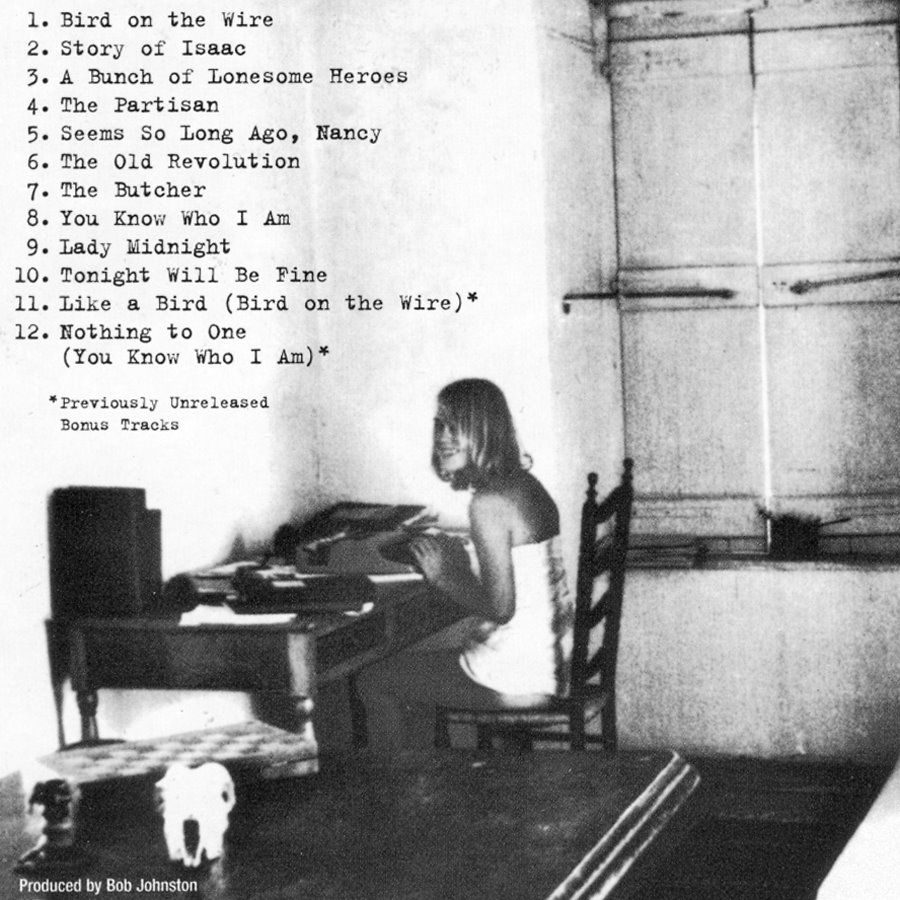 Marianne Ihlen, l’égérie norvégienne de Leonard Cohen, celle qui figure au dos de l’album Song from a Room en 1969 où elle trône face à la machine à écrire de Leonard dans leur petite case grecque d’Hydra, celle qui reçut cette inoubliable chanson So Long, Marianne comme cadeau de rupture, Marianne vient de mourir d’un cancer à l’âge de 81 ans. Leonard Cohen lui a adressé un ultime signe d’affection :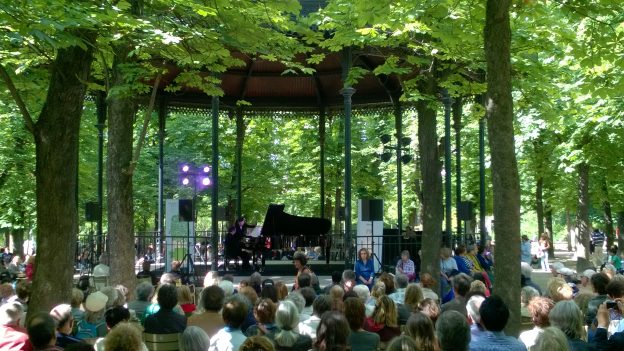


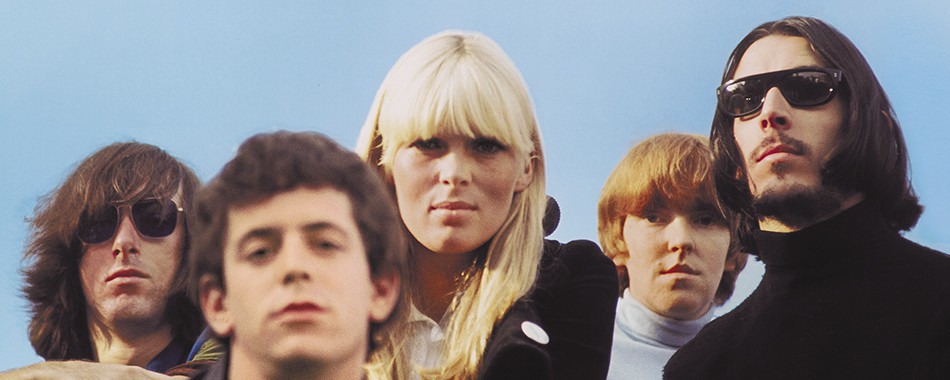
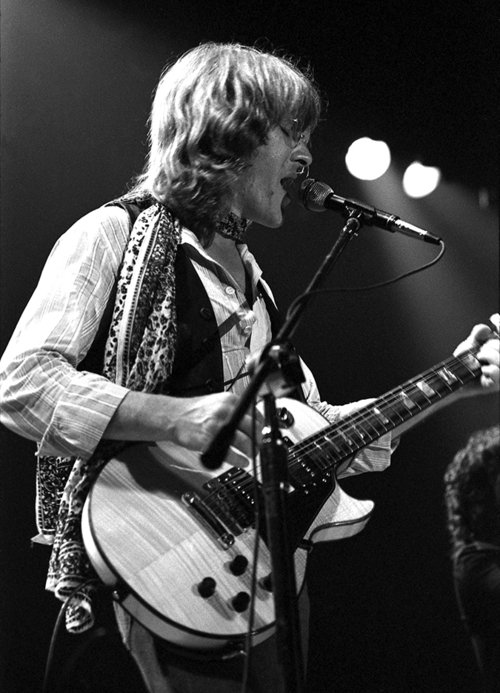 Paul Kantner est mort cette semaine. Il fut l’un des cofondateurs du groupe légendaire Jefferson Airplane qui déclina un rock psychédélique durant le summer of love, des scènes de Woodstock à celles Monterey. Compagnon de Grace Slick, chanteuse du groupe où jouaient également Martin Balin, ainsi que Jack Cassady à la basse et Jorma Kaukonen à la guitare qui fondèrent ensuite tous deux un fameux groupe de blues : Hot Tuna. Ils furent le rock de San Francisco à cette époque lointaine de la deuxième moitié de la décennie 60’. RIP Paul !
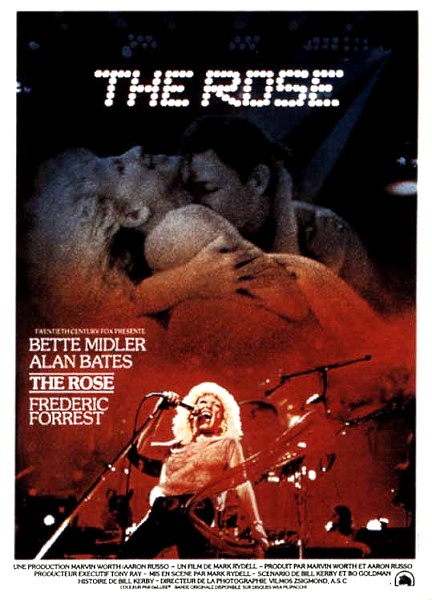 The Rose, film de 1979 ressort cette semaine ou l’histoire tragique à peine romancée de Janis Joplin jouée par Bette Midler. Un film émouvant sur une star du blues happée par la célébrité, un environnement affairiste, la drogue ; mais habitée par la musique qui malheureusement ne la sauvera pas.
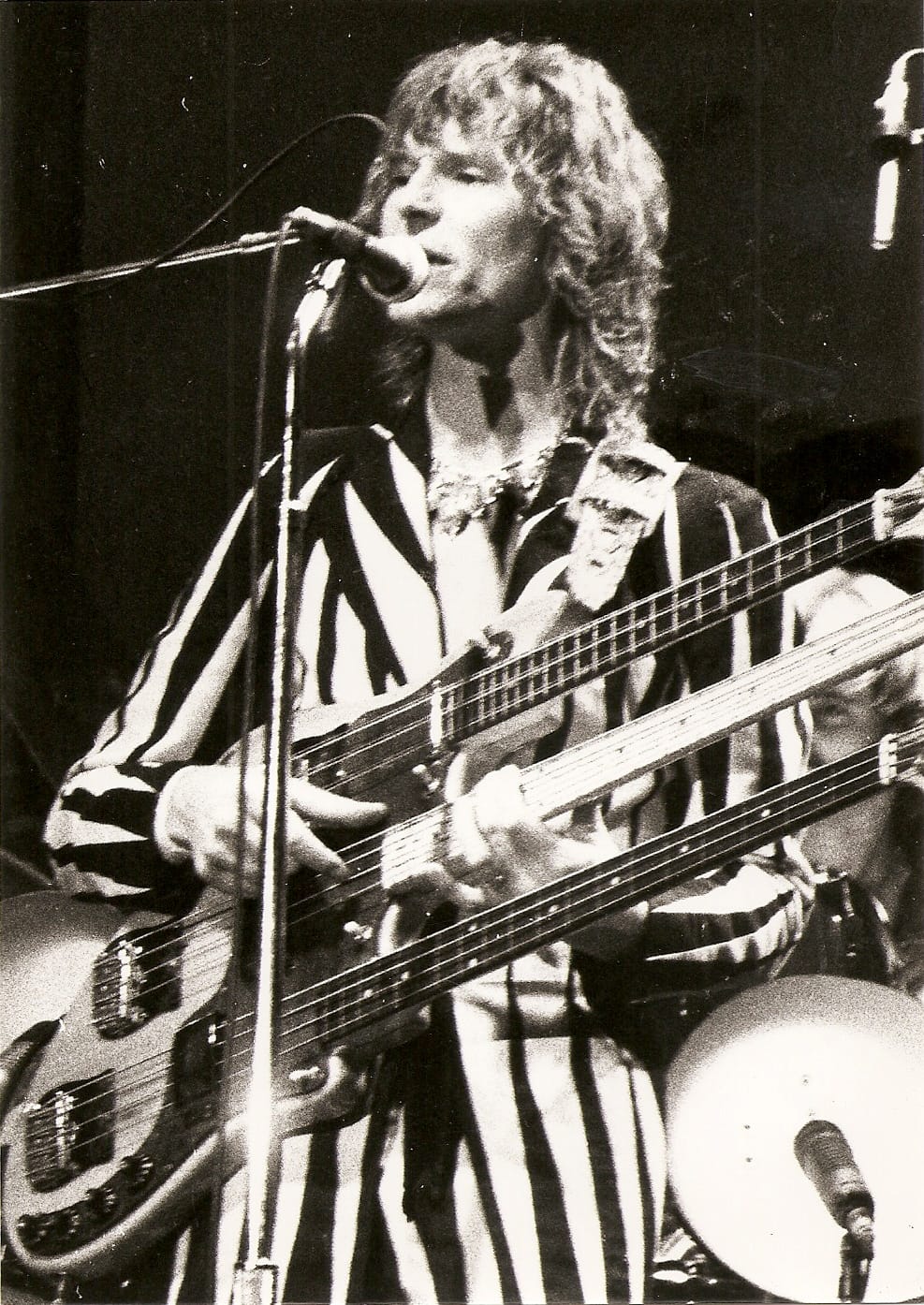
 L’orchestre de chambre de Paris dirigée par Laurence Equilbey joue le Stabat Mater de Dvorak, une musique sombre et tragique écrite par le compositeur tchèque à la fin des années 1870 après le décès rapproché de trois de ses enfants. Déjà basé sur un thème pas particulièrement gai, la souffrance de Marie au pied de la croix où son fils est crucifié, le contexte de la création de cette œuvre en accentue la beauté dramatique.